
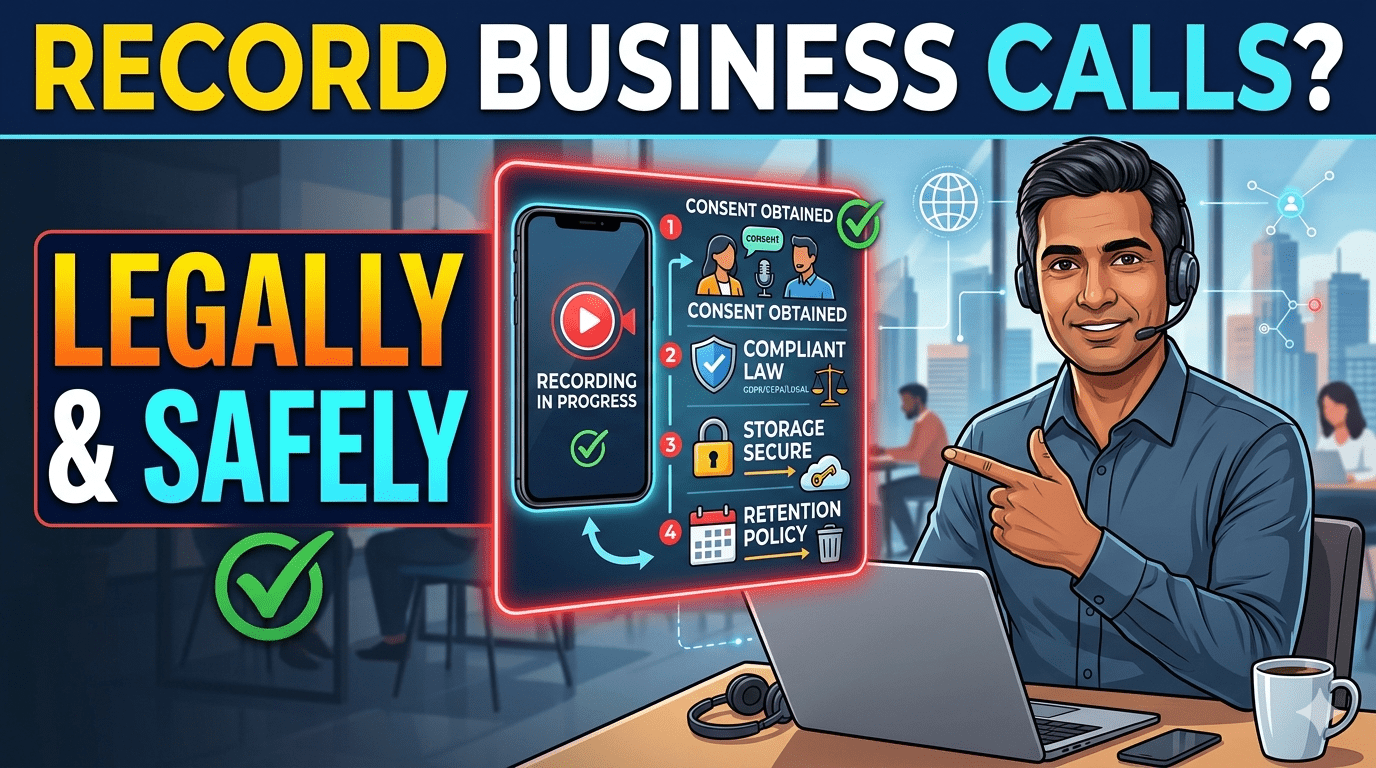
How To Record and Store Important Business Calls Legally
Recording key business calls — negotiations, client agreements, interviews, coaching sessions, or compliance discussions — can protect you, provide clarity, and serve as powerful documentation. With MyLine’s crystal-clear international calling, many users want to capture these conversations safely and legally.
However, call recording laws vary dramatically around the world. Recording without proper consent can lead to fines, lawsuits, or even criminal charges. This guide explains the current 2026 rules, best practices for compliance, and how MyLine users can record and store calls responsibly.
This article is for informational purposes only and is not legal advice. Call recording laws change frequently and are interpreted differently by jurisdiction. Always consult a qualified attorney in your jurisdiction (and the jurisdiction of the other party) before recording any call. MyLine does not provide, endorse, or facilitate call recording — it is the user’s responsibility to comply with all applicable laws.
One-Party vs. All-Party (Two-Party) Consent — The Global Split
Most countries fall into one of two categories:
- One-party consent: You can record if at least one participant (you) consents. You do not need to inform or get permission from the other party.
- All-party (two-party) consent: Every person on the call must consent to being recorded. Secretly recording is usually illegal.
Quick 2026 overview of major jurisdictions:
| Region/Country | Consent Type | Key Notes |
|---|---|---|
| United States (Federal) | One-party | Many states override with two-party rules |
| California, Florida, Illinois, Maryland, Massachusetts, Montana, Nevada, New Hampshire, Pennsylvania, Washington | All-party | Strict penalties — fines & jail possible |
| Canada | One-party | Federal law — one person must consent |
| United Kingdom | One-party (with caveats) | RIPA & GDPR apply — business use needs transparency |
| European Union (GDPR countries) | All-party (in practice) | Consent must be explicit, informed, and freely given |
| Australia | One-party in most states | Some states require all-party for private conversations |
| India | One-party (generally) | No federal law — but privacy laws increasingly strict |
| Singapore | One-party | PDPA requires transparency for business use |
| UAE / Saudi Arabia | All-party | Very strict — recording without consent is criminal |
Step-by-Step: How to Record Calls Legally & Safely
Determine the location of ALL parties on the call. If any person is in a two-party consent jurisdiction, you must obtain explicit consent from everyone.
2. Use clear verbal disclosureThe safest method: At the start of every potentially recordable call, say:
"This call may be recorded for quality and training purposes. If you continue speaking, you consent to the recording."
Document that disclosure happened (date, time, names, purpose).
3. Choose legal recording toolsMyLine does not have built-in recording. Use third-party apps or services that comply with local laws:
- Rev Call Recorder (iOS) – clear disclosure prompts
- ACR Call Recorder (Android) – manual start/stop
- Cube ACR (Android) – auto-recording with consent note
- Cloud-based VoIP recorders (e.g., Gong, Chorus.ai) – enterprise compliance features
Encrypt files, use password-protected cloud storage (Google Drive, Dropbox with 2FA), limit access, and delete after legal retention period (usually 1–7 years depending on industry).
5. Document consent & purposeKeep a log: date/time, participants, disclosure method, purpose of recording, storage location. This protects you in audits or disputes.
Record Smart, Stay Legal, Protect Your Business
Recording important calls can save you from misunderstandings, protect agreements, and improve training — but only when done legally. Always assume the strictest applicable law (usually all-party consent) unless you are 100% certain otherwise.
Follow these steps, use clear disclosure, choose compliant tools, and store recordings securely. When in doubt — consult a lawyer familiar with telecommunications and privacy law in the relevant jurisdictions.
Want to make your international business calls clearer, cheaper, and more reliable? Get MyLine today — perfect audio quality and ultra-low rates, ready for your next important conversation.
About the Author

Amar Behura
Founder of MyLine • Committed to helping businesses and individuals communicate globally with clarity, affordability, and full legal awareness.