
How Global Inflation Has Affected Roaming and Call Prices
Reading time: 7 minutes
Published: March 02, 2026
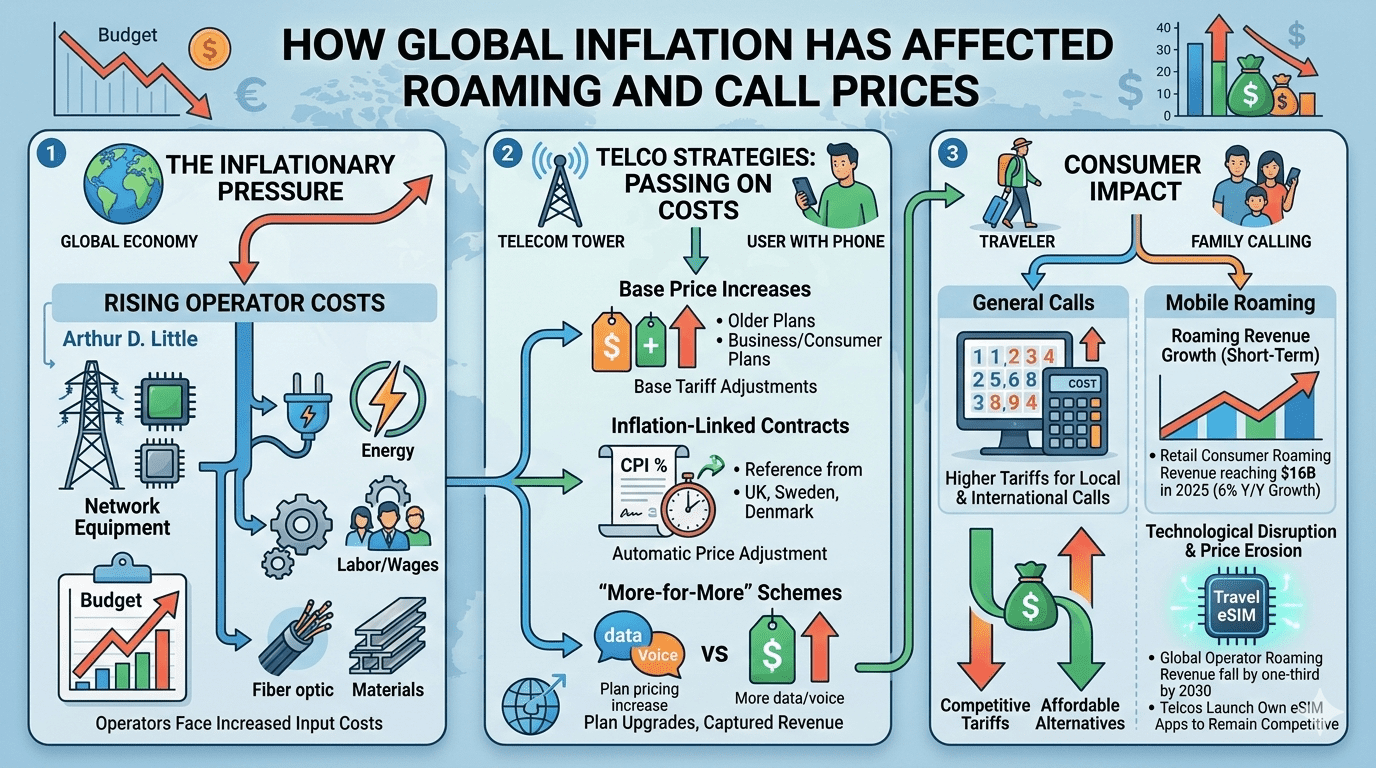
Global inflation has rippled through every industry, and telecom is no exception. In 2026, with inflation stabilizing but still above targets in many regions, roaming and international call prices are feeling the squeeze. Telcos face rising costs for energy, equipment, and personnel, often passing them on to consumers through higher fees.
This guide explores how inflation is reshaping roaming and call prices — from tariff-driven hikes to consumer shifts — and how tools like MyLine offer affordable alternatives in this high-cost era.
1. Rising Operational Costs for Telcos
Inflation hits telcos hard on fixed costs like energy (up 20-50% in some areas), leases, and personnel. With high capex for 5G/6G rollout, margins shrink.
For roaming, higher wholesale rates between carriers mean retail roaming packs cost more — up 10-15% in 2025-2026.
Global telecom revenue grows only 2.8% yearly to $1.32T by 2029, but ARPU falls due to inflation pressures.
2. Tariff and Trade Disruptions
US-led tariffs on tech imports (e.g., from China) raise equipment costs by 10-25%, fueling inflation in telecom.
In the US, tariffs add 0.3-0.5% to inflation, pressuring carriers to hike prices.
Consumers bear the brunt: roaming could rise 5-10% in affected regions, with international calls following suit.
3. Consumer Behavior Shifts
Inflation erodes purchasing power, pushing users to cheaper alternatives like eSIMs and VoIP.
Telcos respond with promotions, but overall prices trend up to cover costs. In high-inflation areas (e.g., emerging markets), users switch to lower-margin services, forcing price competition.
4. Regional Variations
Inflation's impact differs: In advanced economies (e.g., US at 2.7%, Europe near 2%), prices stabilize but tariffs add pressure.
Global average inflation falls to 3.7%, but telecom feels it keenly due to energy dependence.
5. The Role of Alternatives Like MyLine
Amid rising prices, VoIP and eSIM offer relief. MyLine bypasses carrier fees with data-based calls (1-5¢/min), immune to many inflation pressures.
As telcos hike prices to combat inflation, apps like MyLine keep costs low, helping travelers and callers save.
Navigating Inflation in Telecom
Global inflation drives up telecom costs, leading to higher roaming and call prices through operational hikes and tariffs. But with consumer shifts to alternatives, the market is adapting.
Stay ahead — switch to smart calling today.
Inflation rises, but smart calls stay low.
About MyLine
